Hello, Hackaro!
After our last chat, I’ve discussed this with our engineers and carefully verified the relevant system functions. It seems there might have been some misunderstandings due to information not being perfectly synchronized. Please allow me to address your concerns one by one:
-
Regarding RAID Security: The issues you mentioned with early btrfs RAID 5/6 are real, which is why we’ve been extra cautious. In fact, we do not use the native Btrfs RAID solution. As a NAS company, data security is our lifeline, and we take it more seriously than you can imagine. Therefore, you can rest assured about the stability of our RAID implementation. (As an example, a user accidentally messed up their RAID array via CLI last week, and our engineers successfully helped to recover it. This story is just a snapshot of our commitment to data security.)
-
Regarding Disk Health and Monitoring: Our WebUI already provides a fairly intuitive monitoring experience. You can see a health overview of your storage on the Dashboard, and you can view more detailed disk status, including partial S.M.A.R.T. info, in the Storage Panel under Settings. Your impression of “no information” might suggest that our UI guidance isn’t clear enough, and we will consider how to make these features easier to discover.
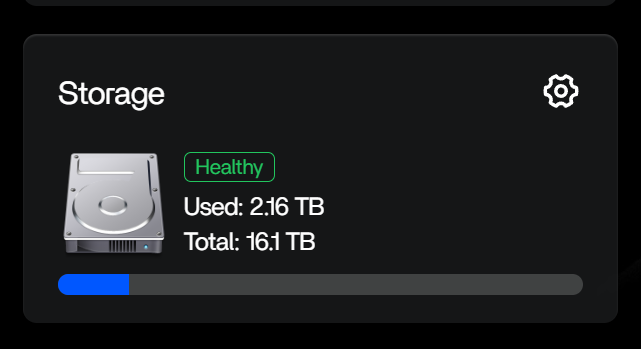
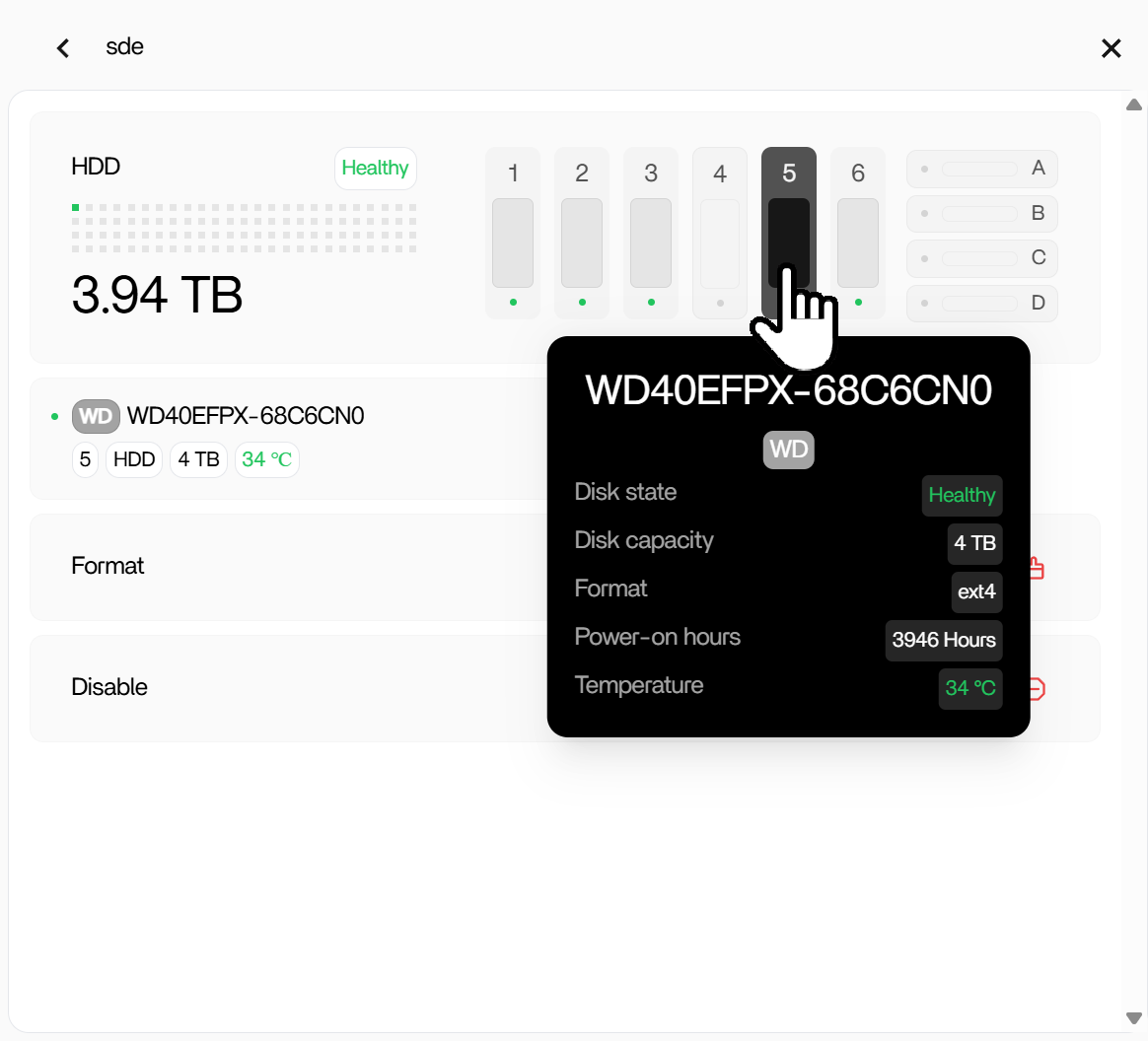
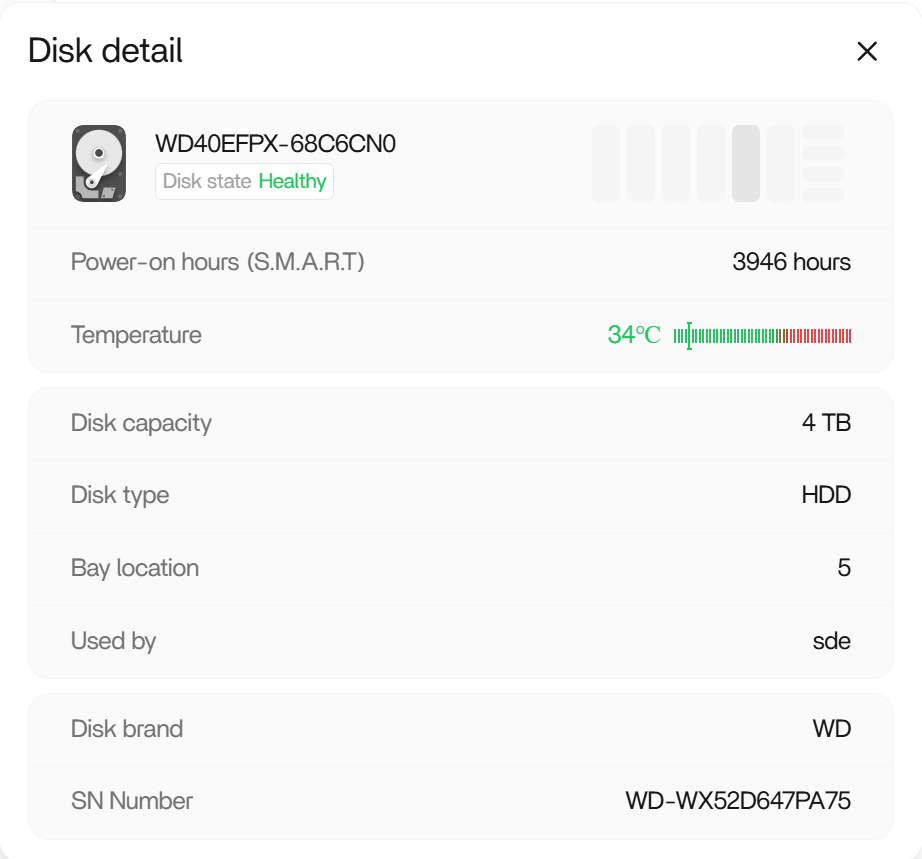
- Regarding Multi-User Functionality: While our multi-user feature is still being progressively enhanced, it is absolutely “real.” We are fully committed to building a feature-rich multi-user environment. In the next one or two planned versions, the Zima Client will also add support for multi-user login.
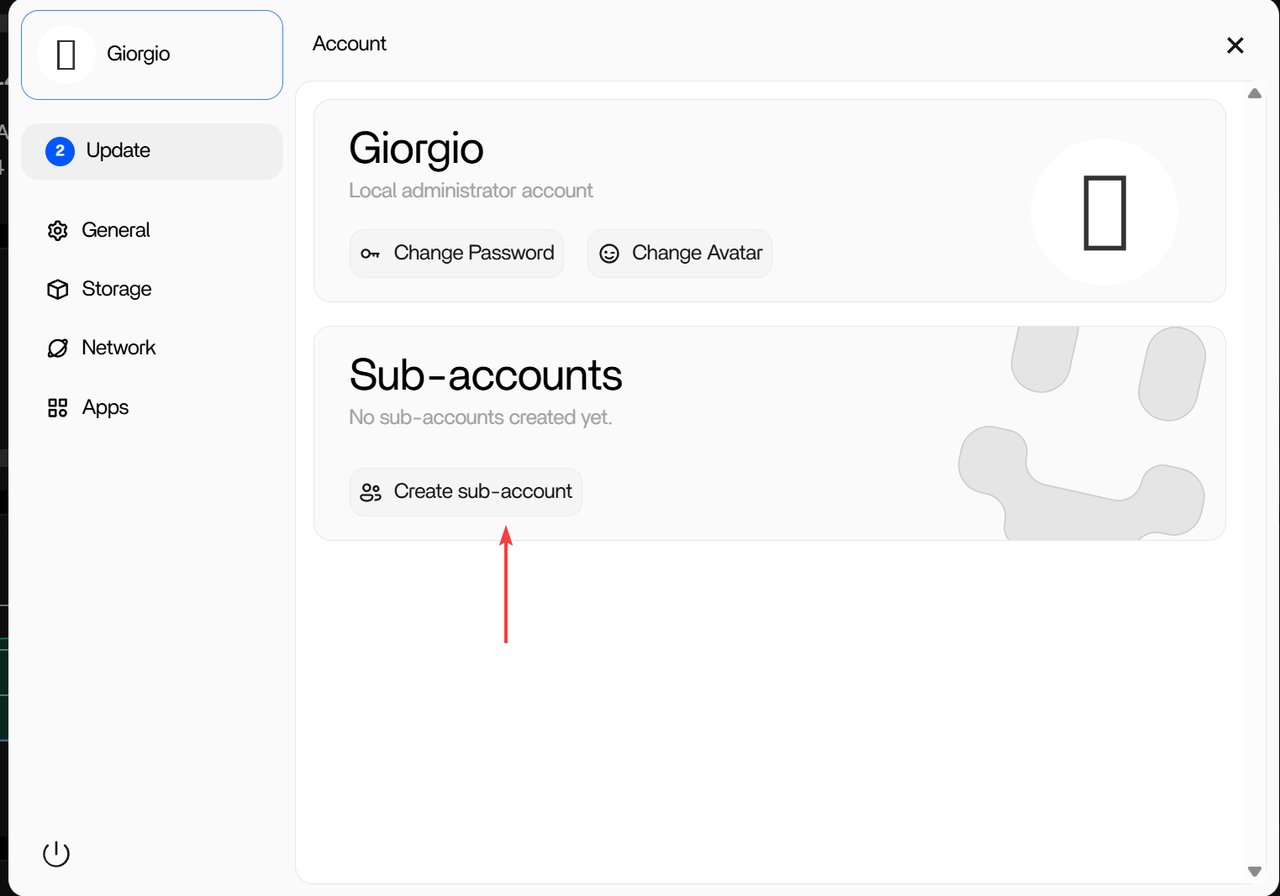
-
Regarding the Task Scheduler: We already have a preliminary implementation of this feature. However, from a design philosophy standpoint, we want to make it simpler and more intuitive. We are planning how to use an excellent GUI to replace traditional code editing, making it easy for everyone to use. It is already on our development plan.
-
Regarding the Risk of an Exposed Boot Drive: I may not have fully understood your point here. Could you please describe the scenario you’re concerned about in more detail? This would help us better evaluate and follow up.
-
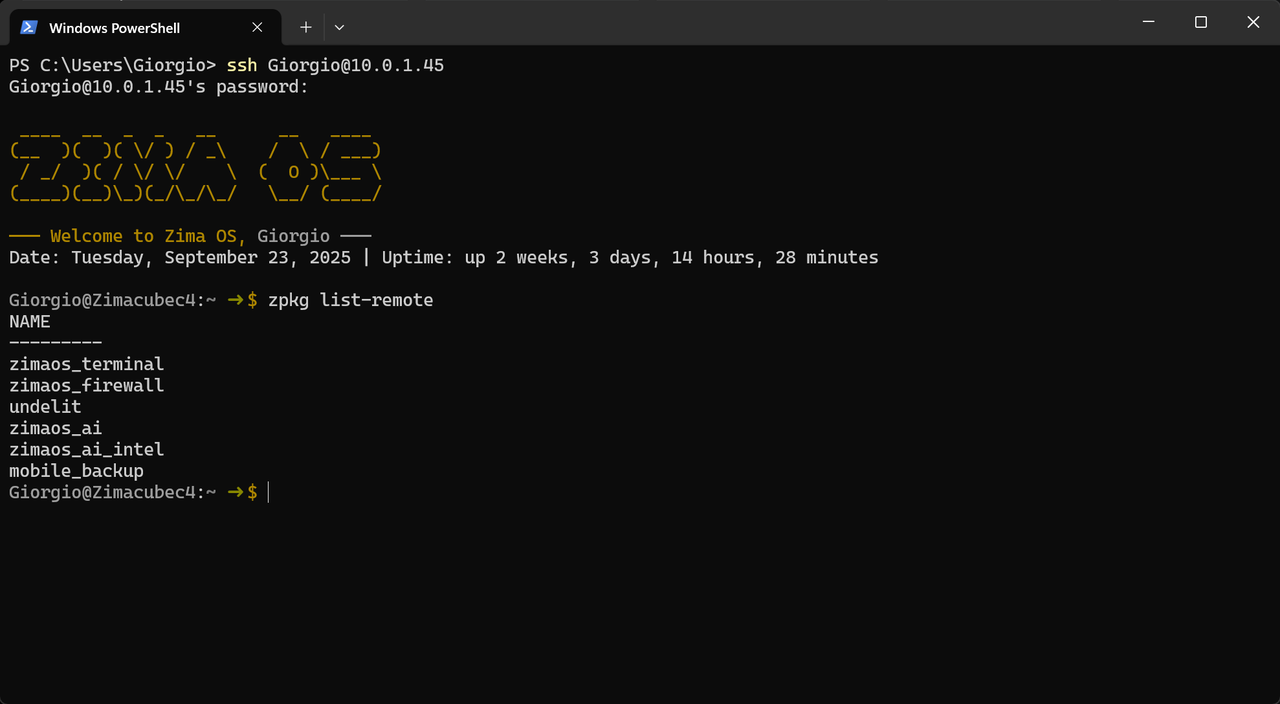
Regarding Modules/Plugins vs. Integration: Our team strongly agrees on the importance of reliability, but we believe that deep integration provides a more stable and reliable experience than a plugin-based model. Plugins have their use cases, and zpkg is our attempt(it is still an early attempt) in that area. Therefore, it’s not that “Zima can’t do it,” but rather a difference in our design philosophy.
-
Regarding Log Monitoring: We are also rethinking the best way to present logs and notifications. We feel that many notification features on the market can sometimes be distracting and may not align with our “out-of-the-box” philosophy. What I can tell you is that a better logging and notification system is on the way.
-
Regarding SSH/CLI: Our philosophy is to create a NAS OS that requires almost no coding, so we generally don’t encourage regular use of SSH. It serves more as a channel for our engineers to provide you with quick support when needed. Furthermore, even under SSH/CLI, most of the file system is read-only by default, which we believe is a more advanced and secure design than most traditional Linux systems.
-
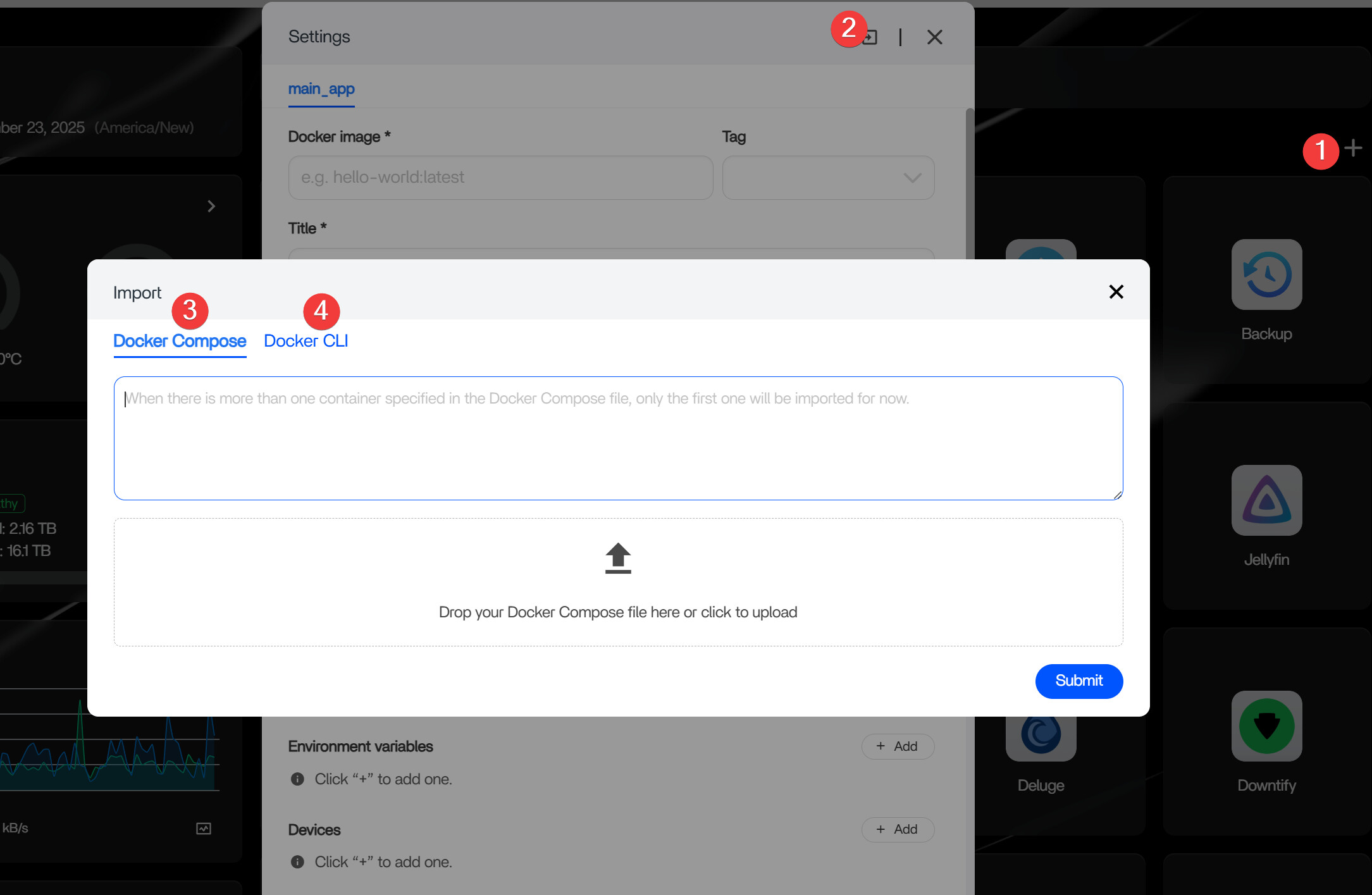
Regarding Docker: You are correct, DSM’s Docker is more complex. Our goal is precisely to create a simpler, more user-friendly application installation experience, which is why our one-click install feature is so popular with the community. Of course, we have also preserved YAML and CLI installation methods as a dedicated channel for advanced users. This is the ZimaOS design philosophy: we do the thinking to make the complex simple for the user.
- Regarding Data Migration: We even provide a solution for migrating from CasaOS to ZimaOS, so migrating from one ZimaOS to another will certainly be even easier.
In essence, all these points lead back to one fact: ZimaOS is a Simplified, Focused, and Open NAS OS, and its philosophy is different from that of traditional NAS systems. We are working hard to deliver on our values.
Regarding the Roadmap, the reason we haven’t made it fully public is largely a business decision to remain agile in a rapidly changing market. Of course, we are considering how to better disclose parts of the roadmap that the community is interested in. You can join the zimaos-open-test-partner-team channel on our Discord server, where we discuss the latest roadmap and direction more promptly with our pioneer users. You are also welcome to follow us on X and Facebook, where the polls and discussions we initiate can also become part of our roadmap.
Thank you again for your detailed comments! This exchange has been very valuable, and it reminds us that we must strengthen our communication to bridge information gaps. We also hope you will try our latest versions to experience the rapid and positive iterations of ZimaOS for yourself.
Let’s build and witness the growth of an exceptional NAS OS together!