Bugs/errors/drawbacks found

Hello, everyone! I would like to leave a review about this system because, after switching from CasaOS to ZimaOS, I was unfortunately not very satisfied.

I found many drawbacks and bugs

  1. The computer application. It works strangely. I mainly use it on macOS, and it works like this: sometimes after a while, it kicks me out and then asks me to enter my password. Okay, I enter my password, but the drives don’t connect. Sad. It periodically kicks me out of my account, and it has limited functionality.

  2. Containers. They work as they please. Installing applications from the store was particularly problematic. If the installation did not go according to plan, the application installation would hang indefinitely at the top. Logging out of the system and restarting the browser does not help; only restarting the system saves the day. I recently installed V2raya for traffic proxying, and all my containers that worked with the bridge network simply stopped opening. I don’t know what the reason is yet, but the solution will be to install another system.

  3. Translation. I use the Russian language, and it’s terrible. Not only is the translation poor, but the font is not very good either.

  4. Closed OS. It is not possible to have full control over the system, nor is it possible to install third-party packages directly on the system (I, for example, need this capability).

  5. Closed ZVM. It is not possible to pass devices from hardware to a virtual system, such as mice, disks, and other devices. The network behaves strangely. If I set one mode, the machine ends up on my local home network; if I set another, it ends up on the internal network. The network does not have access to network folders on ZimaOS.

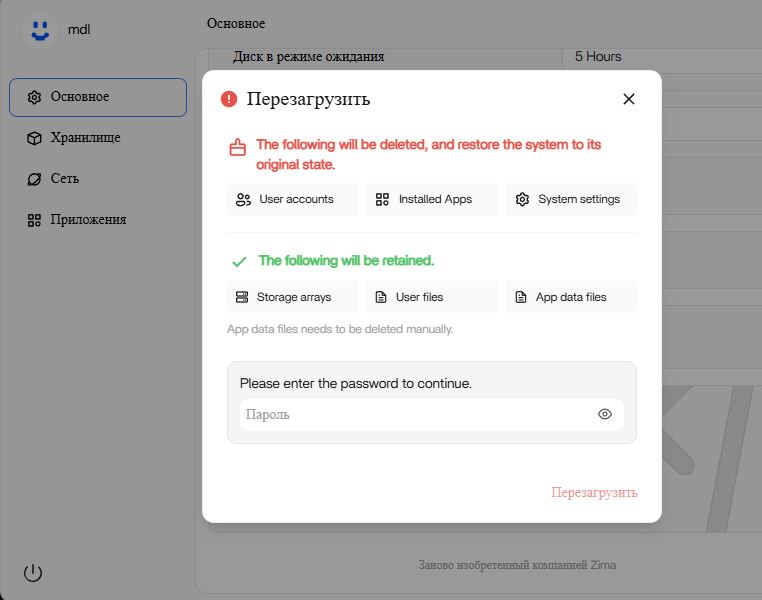
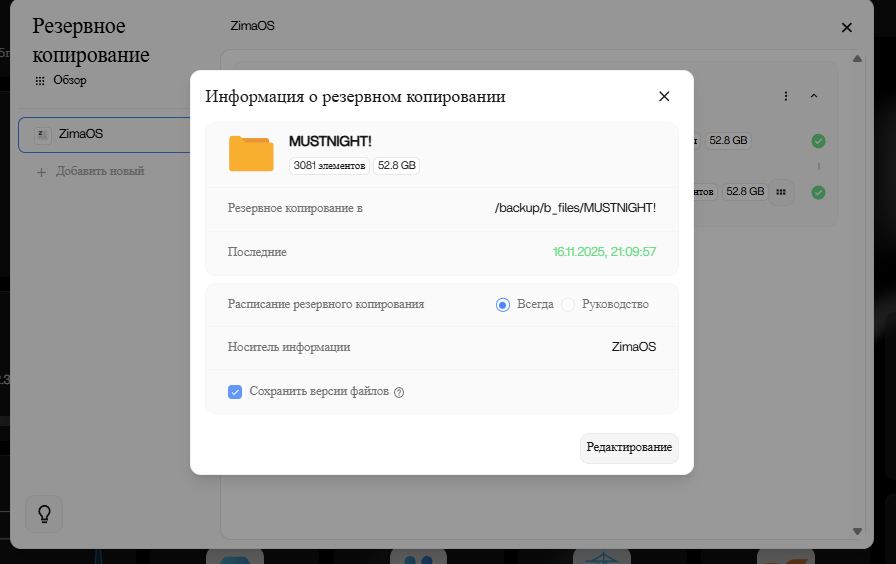
  6. I did not like how the backup system works; it just copies files to the desired disk and that’s it. Come on, they could have added archiving and at least password protection. I’ll have to use duplicati.

  7. Flawed system monitoring with built-in btop/ttyd tools. They just don’t work. I open the monitoring panel through the ZimaOS main panel, and nothing is displayed in the tab, even though it opened and the name is displayed in the status bar.
    Update: Item 7, system monitoring. After updating to version 1.5.2, monitoring works correctly.
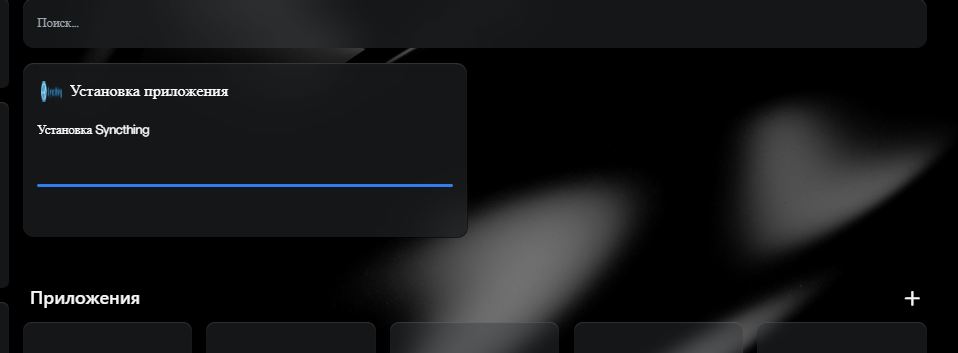
item 2


item 3

item 6

Sometimes when you open an application, it tries to start up endlessly. The application is running, the logs are there, but the web interface does not display anything until you switch the network to the host.

Most of what you’re seeing is how ZimaOS works under the hood, not isolated bugs.

The Computer App on macOS drops sessions because macOS aggressively resets mounts and credentials during sleep. When that happens, the Zima app can’t remount until a full reconnect. macOS is restrictive by design, and Apple keeps everything locked inside its own ecosystem, which makes cross-platform compatibility harder than it should be.

Stuck app installs occur when Docker finishes but the UI never receives the update. A reboot forces a backend rescan and clears the stuck state.

Proxy apps like V2raya can override Docker’s internal DNS, which breaks container-to-container resolution on the bridge. Restarting the Docker backend restores it.

Russian translation issues are simply incomplete locale files and fallback text.

The OS is intentionally closed-system partition locked, everything custom expected to run in containers-similar to pfSense or QNAP.

ZVM exposes only the safe subset of QEMU. Bridged mode joins your LAN; user-mode NAT is isolated and cannot access Samba shares.

Backups are basic file-level snapshots, meant for quick restore, not encrypted archives.

Thank you for your detailed response. However, this does not change the fact that the system is unstable.

I hear you, but it’s worth putting the current state of ZimaOS into perspective.

I’ve been running it for over a year across real hardware, VMs, and mixed storage setups, and what stands out is how quickly it has evolved. The jump from the early 1.3 builds to 1.5.x is significant, faster boot, more reliable storage handling, a rebuilt UI backend, better VM support, improved monitoring, tighter container orchestration, and a steady stream of fixes every release cycle.

Compared to most appliance-style systems, ZimaOS moves unusually fast. Many of the issues you’re seeing now simply didn’t exist months ago because the platform is still expanding and maturing at a rapid pace.

And instability isn’t unique to ZimaOS. Even polished ecosystems like macOS, iOS, Synology DSM, Unraid, and TrueNAS regularly ship updates that break something, especially when introducing big changes. Apple devices in particular are known for strict security resets that disrupt SMB, WebDAV, and third-party integrations overnight.

ZimaOS is trying to unify a modern UI, Docker, virtualisation, NAS features, and network services in a single stack. That means it has to handle a huge range of hardware, configurations, add-ons, and user expectations, far more variables than most platforms need to absorb. Despite that, the long-term trend has been clear: each release becomes more stable, faster, and more capable.

At the end of the day it’s a matter of choice and what fits your workflow. From my experience, the project is advancing in leaps and bounds, and the direction of development has been consistently positive.

2 Likes